Best Practices For Company Websites
Although most business owners realize the key role the internet plays in their success, many of their websites are not nearly as effective as they might be. Why? Because companies assume customers are familiar with their products when they’re not. A website will often reference products as if employees are speaking to each other in the hallway, leaving a visitor lost or confused.
Tap Your Customers
When creating a company website, approach it as if you’re having a conversation with a customer. Don’t use inner-office language. Instead, find out what your customers call your products. Poll your customers when they do business with you, and ask your staff how they hear customers refer to your products. Also, ask what they’d like to find on your website that would be useful to them.
If you’re updating an existing website, forget about all the constraints of your current version. Instead, solicit feedback and ideas on new approaches. If you have questions that customer service can’t answer, develop a short survey and e-mail it to people who make purchases on a regular basis. Then use this feedback to optimize the site and improve its customer experience.
Key Home Page Features
Your home page is the first screen visitors see when coming to your website, so it’s crucial that it’s efficient and easy to use, while also pointing out key calls to action. Consider what your customers want to accomplish when they visit your site and whether these tasks are easy and intuitive. Make sure calls to action align with customer goals, such as contact us, order now, find out more, etc.
Always make it easy for customers to contact you. Instead of linking information from another page, consider giving contact information a prominent location on your home page. Many companies feature this in the top right corner. It should include a phone number, e-mail address, hours of operation, street address and any integrated contact mechanisms such as click-and-chat functionality.
Also, consumers are becoming trained to use home-page footers to navigate websites. These are located at the bottom of the home page. Many companies have also developed super footers, which are essentially site maps listing all the links within the site. Often, visitors who don’t perform a keyword search will navigate your site through the super footer. Two examples of websites that use super footers effectively are www.apple.com/mac and www.vistaprint.com.
Keeping the content and layout simple is an important aspect of developing your home page, too. The home page is not the place to sell customers on your company. People come to websites looking to buy products, not your company. It’s not about your company’s history—it’s about your products and what’s in it for customers at that moment. Some companies use feature sections on their home page to showcase new products or weekly promotions that change frequently.
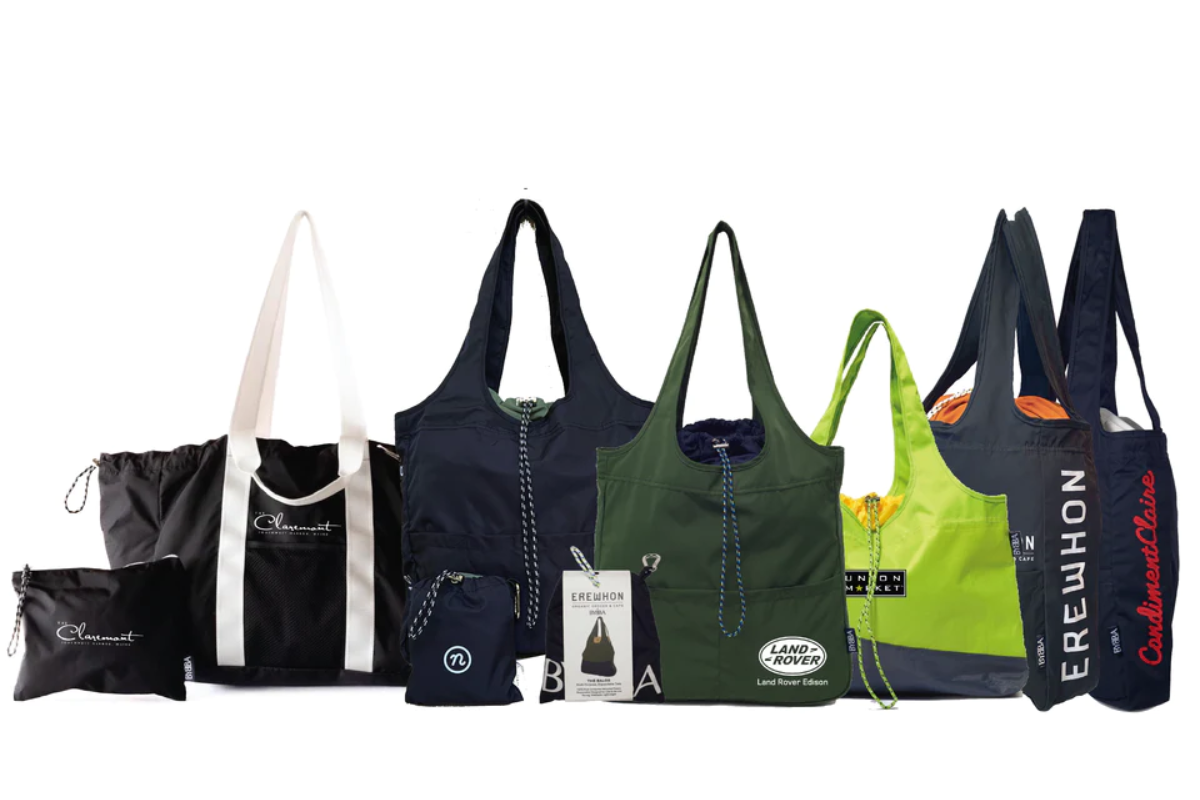
Also, videos are great to feature on your home page—just ensure they’re relevant to your audience. Some promotional products distributors have had great success highlighting videos that show how easy it is to print on bags. And because social media and collaboration are so broadly embraced, make sure you include social media buttons to Facebook, Twitter, LinkedIn, YouTube, etc., in a visible location on your home page.
Search
With today’s fast-paced environment, customers expect to find information online intuitively and efficiently. Adding a search box on your home page—and on every page if you can—will allow customers to type in a product or description to find products quickly. As a business owner, this search provides valuable information about your customers and helps you track the keywords site visitors enter. With this information, you can refine product names and even showcase frequently searched products that may be buried deeper in your site.
Once customers reach your website, they can find what they’re looking for through your site’s search tool. But how do customers find your website among millions of others on the internet? You can build the greatest site on the planet, but if people can’t find you, you have wasted your time and money.
First, it’s crucial to understand the principles of basic organic search. Organic search is based on site content and its popularity and relevance. Your site can be found in many different ways such as online presentations, Facebook likes, social sites, tradeshow activity, YouTube videos, newspaper articles, etc.
Following these practices will help your website gain traction:
• Always include a site map
• Use Google AdWords to research top keywords that need to be incorporated in your content and include sub sections with greater detail on those topics (if they are relevant to your site)
• Add keywords to the title tags of each page and add descriptions or alt tags to each image on your site. Also, instead of using numbers to name images, name them according to the product description such as red cotton shirt or red cotton bag.
Navigation
To allow customers to get a sense of your offerings without overwhelming them, organize your products into simple buckets or categories that are easy to navigate. If you’re a promotional products distributor, these high-level buckets across your home page navigation may include t-shirts, bags, mugs, etc. Then, when customers scroll over mugs, they’ll see subcategories such as ceramic, plastic, travel, etc. When organizing your categories, tap into your customer feedback and customer service staff to ensure they are most effective.
Some companies have found success leveraging the experience of customers on their website. Based on their feedback, you can highlight the most popular or most recently viewed products within the navigation buckets.
Another important element of navigation is to make sure customers are aware of where they are within your site at all times and that they can get back to a page if needed. To make it easy, most company websites use breadcrumb trails, which allow visitors to keep track of their location within a website. These typically appear horizontally across the top of a web page, usually below title bars or headers.
Simplify Content And Design
When it comes to developing content for your website, strive to keep it simple. Provide a small amount of high-level information with the ability for customers to click to view more details. Keep your website customer-centric by making it easy for them to find what they’re looking for quickly.
Design should be clean and simple. Many small companies commit a faux pas when they add flashy images that take too long to load. Most customers will leave your site and go to a competitor’s if they have to wait for images to load, so always optimize your images. Also, the quality and view of your images reflects your company’s products and credibility.
Be sure to offer multiple images with different views because your customers can’t feel or touch the product. Combining customer reviews with images is also incredibly helpful. It lets potential customers know details they can’t get elsewhere. A customer might comment that a certain product looks good, but that the color or texture isn’t quite what he was expecting. Even a slightly negative review can create a sale.
One-Stop Virtual Shop
When you create your company website, be sure that it’s a one-stop shop for customers. When customers come to your website, they most likely want to conduct business with you. So you have to make sure they have this ability. Not only should they be able to find information about your company and your products, they should also be able to fill out online forms, create an account, make a transfer, e-mail customer service and purchase your products.
If you include a shopping cart on your website, be sure that it tabulates the dollar amount and the number of items in the cart.
You should always view your company website as a work in progress that needs improvement to stay current and relevant to your customer base. Plan to make upgrades—even small ones—on a regular basis. And as you develop your site, keep in mind how you want to measure your success, including your goals as well as your customers’ goals.
Carleen Gray is vice president of marketing for supplier Stahls’ ID Direct (UPIC: STAH0001) and is a member of PPAI’s Suppliers Committee.


One Response to Best Practices For Company Websites
Carleen, what an excellent article, since over 19,000 of our distributors are less than $1MM and 4% of our distributors do 50% of the revenue the internet,mobile & tablet apps,and online presence in general are more important than ever. 82% of us look online before we pull the trigger to buy something.Take into consideration our largest demographic, baby boomers are leaving the industry in record numbers and their replacements, Millenniums are coming into our industry in record numbers means a whole new set of best business practices, and those practices will not be politically driven they will be technology driven